62 Schoolchildren Said They Saw Aliens. One Harvard Professor Believed Them.
How an alleged extraterrestrial encounter at a Zimbabwe elementary school caused an international uproar that echoed through the halls of Harvard.
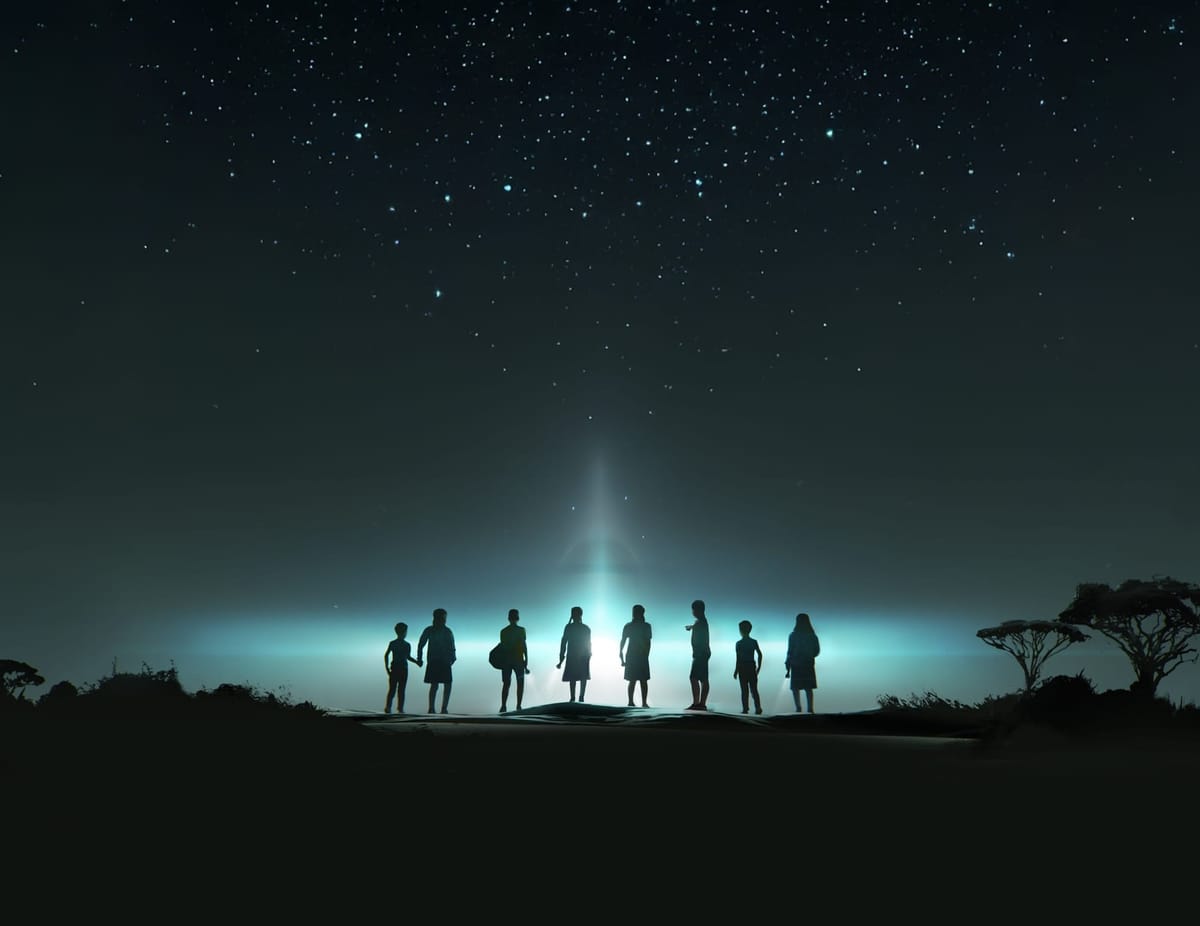
It was just after 10am in Ruwa, Zimbabwe when dozens of students at Ariel Primary School came running back from recess in a frenzy. Clad in baby-blue uniforms with wild-eyed excitement, the cacophony of children started to insist to their teachers that something extraordinary had happened. They had seen glowing discs beaming through the trees, and strange-looking beings with big black eyes that moved almost in slow motion. They had heard a message, they said, about protecting the earth from environmental destruction.
The uproar at the school was too much for staff to contain, and the children were insistent that it was all real. Staring up at skeptical, confused teachers they were adamant they experienced something that defied worldly explanation. Altogether 62 students told disbelieving teachers and parents they saw an extraterrestrial phenomenon. Word began to spread.
What unfolded over the course of the next few weeks was one of the most extensively documented cases of an alleged mass UFO sighting in history, one that became international news before it was relegated to a footnote in history. The incident would shape the children, teachers and researchers at the heart of it, becoming a memory that they would try to make sense of for decades to come.
All of it would begin in a small elementary school on the outskirts of Zimbabwe’s capital on a sunny Friday morning in 1994, when children from all different backgrounds and families became unified in their determination that they had seen something beyond belief.
The Man From Harvard
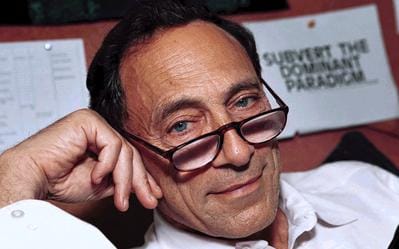
Almost 8000 miles away from Ruwa in the halls of Harvard University was John Mack. A Pulitzer-prize winning author who had practically built the university’s psychiatry department from the ground up, Mack had recently found that he was out of favor at Harvard and facing a barrage of questions over his latest work – an investigation into the psychology of people who claimed to have been abducted by aliens.
Mack’s career was defined by a profound sense of curiosity, many of his colleagues said over the years, and even those that disagreed with where that curiosity took him found that he was relentless in his pursuits. Born in New York to a German-Jewish family, he had traveled the world – including a trip on camelback through Jordan in the 1970s to research a memoir of TE Lawrence – before landing at Harvard. His piercing blue eyes and friendly smile made him stand out from the crowd, and he brought charisma and conviction to his lectures there.The scientific community and many within his own department had begun to turn away from Mack, however, as he had become increasingly interested in extraterrestrial life. The criticism escalated after he published his book Abduction: Human Encounters With Aliens in early 1994, which became a bestseller. Mack interviewed dozens of people who believed that they had intimate, real life interactions with extraterrestrials and chronicled their experiences in exacting detail.
What surprised Mack’s peers was that he didn’t regard these people as fabulists or crackpots, but that he believed they had experienced some kind of external trauma. These weren’t people seeking fame or making things up, he thought, in fact many of them didn’t want to believe it themselves. Mack’s criteria for including their stories was “simply whether what has been reported was felt to be real by the experiencer and was communicated sincerely and authentically to me.” Rather than dismiss their narratives, he took them seriously and decided that they represented something that could not be explained psychiatrically.
“For a clinician like myself, trained in the Western tradition, the temptation is to accept some experiences and reject others as too ’far out,’” Mack wrote in an opinion piece for the Washington Post at the time. “I suspect such discriminations are not wise or useful.”
But while Mack believed his interview subjects, Mack’s colleagues didn’t believe him. The university had begun to conduct a confidential investigation into his practices, which he planned to fight. Other professors and psychiatrists were also giving interviews to the press casting aspersions on Mack’s willingness to believe the extraordinary.
Mack intended to continue his research, however, and was planning a trip to Southern Africa to conduct more interviews with alleged abductees. There had been a range of unexplained pyrotechnic events in the sky above the region that had been reported in local media and were generally dismissed as meteor showers or perhaps rocket tests, but garnered rumors among UFO seekers that they could be something more. But as Mack was preparing his trip he received an unexpected call about the Ariel School Incident, and set out for Zimbabwe as fast as he could.
A School In Uproar
The commotion at Ariel had drawn immediate media attention. News of the incident had been broadcast nationwide over the radio, while the BBC’s Zimbabwe correspondent Tim Leach had gotten word of the event and traveled to the school. Leach was an experienced journalist who had reported in war zones and formed the country’s Foreign Correspondents Association, but he was unprepared for the scene he arrived to find at Ariel.
“Could you tell me what you saw on Friday?” Leach asked one of the children.
“It was glinting in the trees. It looked like a disc,” the little boy responded.
“Are you sure it wasn’t a Harrier jump jet or something from the Zimbabwe air force?” Leach probed.
“No, it was like a disc,” the little boy said anxiously.
Other children had even more explicit recollections of what they saw, describing ships and extraterrestrials in detail to Leach and his crew.
“They had big black eyes. That’s all I saw. I saw a glimpse, they stared and then went back into a ship,” a little girl told the BBC.
Leach also spoke with the school’s headmaster, Colin Mackie, who had given the children the benefit of the doubt – unlike many of the teachers at the school who had told the children to quiet down about what they saw and return to their studies.
“I feel sure that the children feel they did see something,” Mackie told Leach. “We asked them to draw pictures of what they saw on Friday, and after looking at those I feel that they definitely did see something.”
Soon other media and researchers were on the scene, including a local UFO Investigator named Cynthia Hind who published a small newsletter about alien encounters in Africa. Hind spoke with many of the children as well, documenting the case for her publication. Hind found that the children’s accounts, though consistent, were being met with hostility. The media attention and the fact that the children would not stop talking about the incident was grating on parents, who wanted a return to normalcy at the usually well-heeled school. Hind found that most of the parents were especially hostile to believing their children and the account of what happened that day, concluding her report by lamenting their lack of willingness to listen.
“What a frightening indictment of our society that when we are confronted by something we don’t understand, we don’t even attempt to open our minds to the event,” Hind wrote.
The story may have ended there, relegated to Hind’s research and a brief BBC report, but Leach needed to know more. He sought out someone who might be able to give an expert view on the situation – John Mack.
“I could handle war zones, but I could not handle this UFO thing,” Leach told a documentarian years later. “It just didn’t make sense. And that’s when I had to call in extra help.”
“Listen and think about what they’re saying”
When Mack arrived at Ariel in the weeks following the incident, he began carrying out his own interviews. He approached the children the same way he approached his other research on people who claimed to have seen some form of extraterrestrial life, deciding to listen to their accounts and take them seriously.

Mack found that the children all had nearly uniform experiences and drew nearly identical pictures of what they believed they saw. The children also had a message they wanted to share from the experience, something they had felt communicated to them through their encounter and believed they needed to relay.
“We don’t look after the planet and the air properly,” one of the students told Mack, shifting in her chair inside the classroom as he listened intently.
Mack paused afterward, trying to find the best way to ask the little girl his next question.
“Is this an idea that you have had before – that we don’t properly look after the planet and the air – or is this an idea that came to you when you had this experience?” Mack asked.
“When I had this experience,” the girl responded.
Mack interviewed several of the other students who echoed the same message – the visitors were worried about pollution, the environment and the future of the planet. He concluded that the children weren’t making up their experiences, that they felt what they had seen and felt was real. He gathered a group of parents to give them his professional view.
“The children we talked with clearly were talking about a phenomenon that occurred in physical reality,” Mack told the parents. “The stories were consistent.”
While many remained skeptical, Mack’s insistence and his credentials gave the children’s words a new weight. Mack was already sticking his neck out professionally by being there, let alone taking the side of children against adult teachers and parents, but his conviction began to break down barriers.
“John was able to get through to parents and teachers and convince them that, even if they did not believe the children, it was counterproductive to accuse them of lying,” Hind wrote. “Listen and think about what they are saying, he advised.”
The incident attracted local speculation about why Ruwa and Ariel would be the site of such a landing as well. Duke Musonza, the son of a village chief who was regarded as a seer, later told documentarians about his theory of why it was children who claimed to have heard the aliens warning.
“If you want a message to be delivered, it has to be delivered to children,” Musonza said in a 2022 documentary about the incident. “Because the child grows with the message.”
Musonza was part of a longer spiritual tradition of the area, one in which the local Shona people believed that the land around them was a place of mythical importance and the Ngomakurira mountains north of Ruwa were where people could communicate with the heavens.
The Unexplained
When Mack left Zimbabwe he had collected video interviews, drawings and accounts from children at the school he would incorporate into his research back at Harvard. He managed to beat the university’s investigation into his practices, but the black eye that it gave him would forever damage his mainstream reputation. Leach was pulled onto new stories for the BBC and Hind moved onto other sightings. The children were left with their experiences and without an explanation.
History is filled with mass events that defy any normal categorization. Mass hysterias and panics have gripped communities all over the world, sometimes resulting in tangible and physical effects. In 1980, almost 300 people in Nottinghamshire, England all began experiencing fainting spells and extreme nausea with no chemical or physical cause. In 1962 in Tanzania, almost 100 young students broke out in fits of uncontrollable laughter for days on end without any psychological reason.
Experiences with mass sightings of UFOs have often been put in a similar box of mass hysteria, but have struggled with how to explain how people involved develop such fervent belief that they saw something extraterrestrial and how groups come up with near-identical accounts of what happened.
Others have tried to find what happened at Ariel, but received only conflicting claims. One of the students at Ariel, identified only by their first name in a 2023 Vice documentary on the incident, claimed years later as an adult to have made up the encounter as a youthful prank. He and a friend told other children that a shiny reflective rock was a spacecraft, he told filmmakers, causing a mass hysteria among fellow students. The other students dispute his account, insistent that they saw what they saw.
As the incident passed into history, so did many of the people who documented it. After a long career in media, Tim Leach died in 2021. Hind passed away too, leaving reams of accounts documenting UFOs over Africa. Mack died in 2004, struck down by a drunk driver after giving a lecture in London on TE Lawrence. The children, now grown up, have scattered across the country and world since the incident – many still thinking of the message they heard over thirty years ago.